Sports Nutrition in Morocco: Eat Local, Progress
Sardines, tajine, harira, amlou, Tafilalet dates: build your training-day plates from real Moroccan foods, with no scale and no imported diet plan.
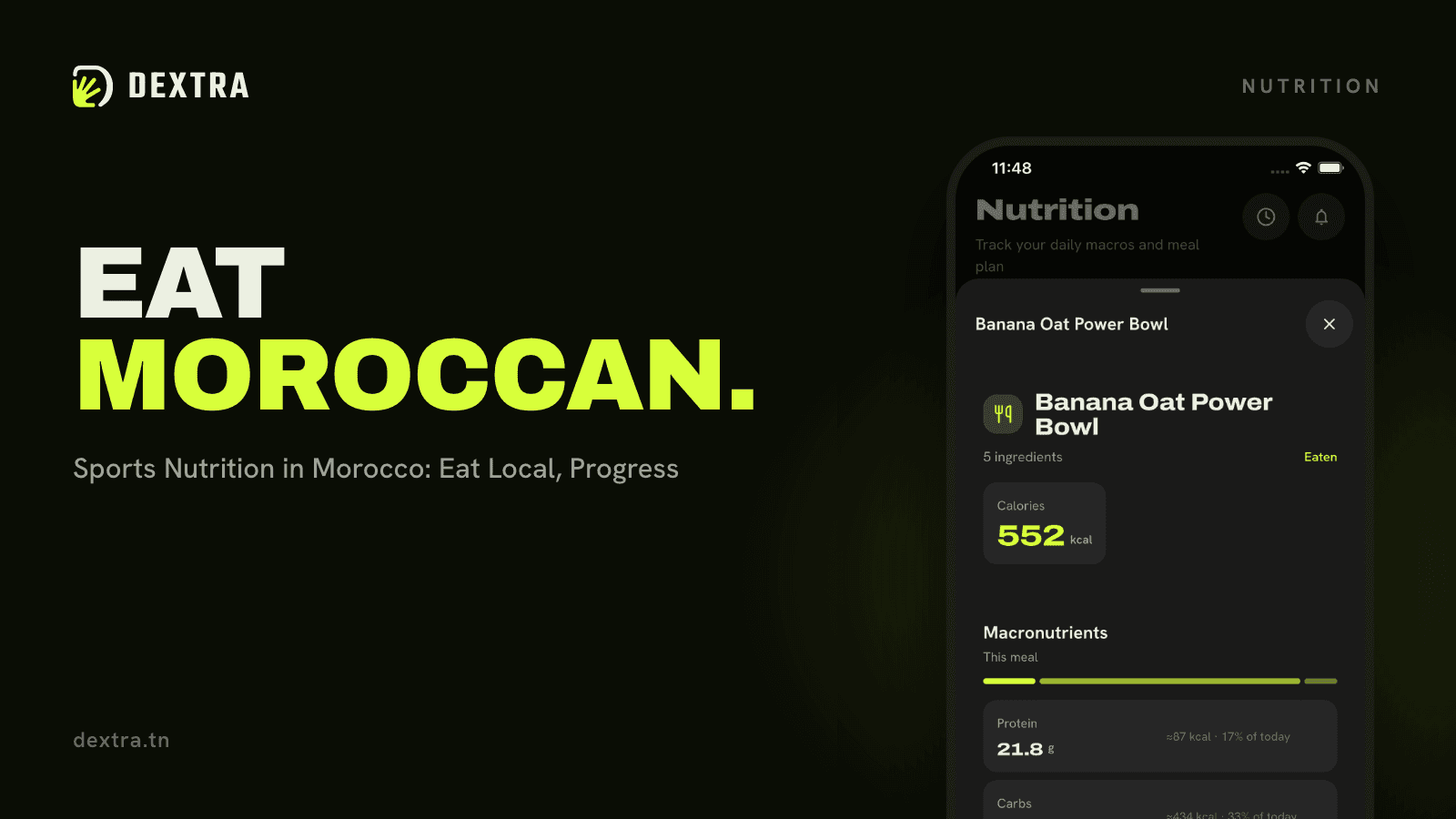
At the market in Rabat or in the old medina of Fez, stalls of fresh sardines sit next to piles of dates, bunches of coriander and sacks of lentils. Morocco is one of the world's largest sardine producers, with Safi and Agadir as major fishing ports, and that alone should be enough to convince you that no imported food is required to fuel your training well. The real question is not where to find good food in Morocco, it is how to combine it at the right time and in the right amounts.
Moroccan fish: sardines lead the way
Few countries have such direct access to an oily, cheap, protein-rich fish as Morocco does with sardines. Grilled, in a tajine, or marinated in chermoula, they deliver quality protein and healthy fats at a price few other sources can match. Mackerel and whiting follow the same logic: affordable, simple to cook, and present on most coastal stalls from Tangier to Agadir.
Everyday protein, beyond fish
- Eggs: cheap and available everywhere, in a chakchouka in the morning or hard-boiled in a salad.
- Chicken: the base of many tajines, simmered with vegetables and spices rather than fried.
- Lentils, the base of dishes like rfissa or a simple hearty soup: rich in plant protein and fibre.
- Chickpeas, present in harira and many stews: a strong, affordable source.
- Lben and curdled milk, easy to add as a snack or at breakfast, an already well-established habit in many Moroccan homes.
Vary these sources across the week rather than settling on one: a day with eggs in the morning, fish at lunch and lentils at dinner already covers your needs very well.
Moroccan carbohydrates: from bread to Tafilalet dates
Couscous, the Friday dish in many families, remains an excellent staple carbohydrate when served with vegetables and a protein source. Bread, present at nearly every meal, is best chosen wholegrain when possible, to keep you full longer. Msemen and baghrir are delicious but better suited to occasions than daily eating, given their fat and sugar content. Dates, especially those from the Tafilalet region, are Morocco's natural sugar par excellence: two or three before a session give a quick, easily digested lift.
Healthy fats: olive oil, argan and amlou
Moroccan olive oil, produced abundantly especially around Fez and Meknes, remains the base to favour for daily cooking and seasoning. Argan oil, rarer and more expensive, is best kept to small amounts, a drizzle on a dish or in amlou, that mix of almonds, argan oil and honey which makes an excellent energising snack before a session, provided you do not overdo it given its calorie density. A small handful of almonds or walnuts rounds out these fats outside main meals.
Vegetables and tajines
Vegetable tajine, with or without meat, is one of the simplest ways to build a solid portion of vegetables into a complete meal. Zaalouk, made from aubergine and tomato cooked slowly, and bissara, a soup of fava beans or split peas, are two traditional dishes rich in fibre and inexpensive, perfect as a side or a light meal. Seasonal vegetables, bought at the souk rather than a supermarket, often cost less and taste better. Aim for a solid portion of vegetables at every main meal.
Build your plate the Moroccan way
No kitchen scale required: your hands are enough, always available and proportional to your size.
- Protein: a portion the size of your palm per meal.
- Carbohydrates: a portion the size of your closed fist, adjusted to the day.
- Vegetables: two open handfuls, with no real limit.
- Fats: the size of your thumb for oil, almonds or amlou.
On training days, keep one to two portions of carbohydrates per meal, with a fast source like dates around the session. On rest days, cut carbohydrates back and fill the space with more vegetables and a slightly more generous protein portion.
Before and after training, Moroccan style
Before the session (one to two hours before):
- A slice of wholegrain bread with fresh cheese and a few dates.
- A light bissara if you train in the late afternoon.
- Lben with a handful of almonds if you are short on time.
After the session (within two hours):
- Fish tajine with vegetables.
- Grilled sardines, potatoes and Moroccan salad.
- Chicken simmered with vegetables and a little couscous.
- A hearty lentil soup with wholegrain bread.
What matters after effort is getting a protein and a carbohydrate into the same meal.
Hydration and the Moroccan climate
Morocco does not have a uniform climate, and your hydration should adapt accordingly. On the coast, in Casablanca or Tangier, humidity makes you sweat without always realising it. In Marrakech or Fez, dry summer heat dries you out faster than it feels. At altitude, around Ifrane, dry winter air dehydrates too, in a different way. In every case, drink regularly throughout the day, not only when you feel thirsty, and bring a water bottle to every session. Mint tea remains a social pleasure, not a substitute for water.
Useful habits for training in Morocco
A few simple habits make sticking with this easier over time, whatever your training actually looks like.
- Shop on the weekly souk day in your neighbourhood, when vegetables are freshest and cheapest, and cook several days' worth in advance.
- Keep dates and almonds in your bag, as an emergency snack before an unplanned session.
- Do not dread the family Friday couscous; build it into your plan rather than avoiding it or feeling guilty afterwards.
- Cook extra when making a tajine or harira, so leftovers cover the next day's meal with no extra effort.
Cut back without deprivation, eat well without overspending
No food is forbidden, but some, eaten daily, hold back progress without you noticing.
- Fried food: briouates and chips, keep them for occasions rather than daily life.
- Sugar in tea: cut back gradually, half a sugar cube at a time.
- Daily pastries: msemen or an afternoon treat, enjoy them at the weekend rather than every day.
Sports nutrition does not have to be expensive. Eggs, lentils, chickpeas and sardines are among the cheapest proteins in the country. Buy your vegetables at the souk late in the morning, favour what is in season, and cook in bulk at the weekend: a tajine or a pot of harira covers several days.
A sample day
- 1.Breakfast: two eggs, a slice of wholegrain bread, fresh cheese, lightly sweetened tea.
- 2.Snack: lben and two dates.
- 3.Lunch: chicken tajine with vegetables and a little couscous.
- 4.Before training: a handful of almonds and a date.
- 5.Dinner: grilled sardines, zaalouk and wholegrain bread.
On rest days, drop the pre-training snack and reduce the couscous portion in favour of more vegetables.
If you have a medical condition, speak to a doctor or dietitian before changing how you eat. And if you want a plan adapted to your schedule, your tastes and your budget, Dextra's certified coaches can support you with personalised nutrition follow-up directly in the app, free on iOS and Android.
Related guides
Ready to start your journey?
Download Dextra and get a personalized plan built for your goals.
Download Dextra